Water damage and mold risk from a hidden plumbing leak
By Petra Vogel · Updated 2026-07-06
This is general information about water damage and mold risk, not medical or environmental testing advice. If you have health symptoms you suspect are related to mold, speak with a health professional, and for a formal mold assessment, consult a qualified inspector.
How a small leak becomes a big problem
A pinhole leak in a supply line, a slowly failing seal around a shower pan, or a fitting that weeps rather than sprays is exactly the kind of problem leak detection work exists for, and it can go unnoticed for a long time, because the damage happens slowly and often somewhere you don’t look every day: behind a wall, under a subfloor, or inside a ceiling cavity. By the time it’s visible, the leak has usually been active for weeks or months, and the water damage plus any mold growth is often more extensive than the original plumbing problem would suggest.
This is part of why insurers commonly treat gradual leaks differently from sudden ones: the slow, unnoticed nature of the damage is the whole problem.
Warning signs worth investigating
- A musty or earthy smell in one part of the home that doesn’t go away with normal cleaning or ventilation.
- Discoloration or staining on drywall, ceilings, or around baseboards, even faint.
- Soft or spongy flooring, especially near a bathroom, kitchen, or laundry area.
- A higher-than-usual water bill with no obvious explanation, which can point to a leak running continuously somewhere in the system.
- Peeling paint or bubbling drywall texture, a sign moisture is trapped behind the surface.
- Visible mold spots, even small ones, in bathrooms, under sinks, or near exterior walls.
Any one of these on its own might be nothing. Two or more together, especially in the same area of the home, are worth taking seriously. Not every hidden household hazard involves water: gas leak and carbon monoxide warning signs are worth knowing too, since both can develop quietly behind the scenes.
Bathrooms and kitchens are the most common starting points, since they combine plumbing connections, tiled or sealed surfaces that can hide moisture behind them, and regular water exposure that makes a small leak harder to distinguish from ordinary splashing or condensation. Basements are the other frequent source, particularly around older foundation walls, sump areas, or where a main line enters the home. If a musty smell seems to concentrate in one of these areas, that’s usually the place to start looking.
| Sign | What it often means | Urgency |
|---|---|---|
| Musty smell, no visible damage | Leak likely hidden behind a wall or under flooring | Investigate soon |
| Visible staining or discoloration | Active or recent leak | Investigate soon |
| Soft flooring | Sustained moisture, possible structural concern | Address promptly |
| Rising water bill | Continuous leak somewhere in the system | Investigate soon |
| Visible mold | Moisture has been present for some time | Address promptly |
How a leak gets found without tearing the house apart
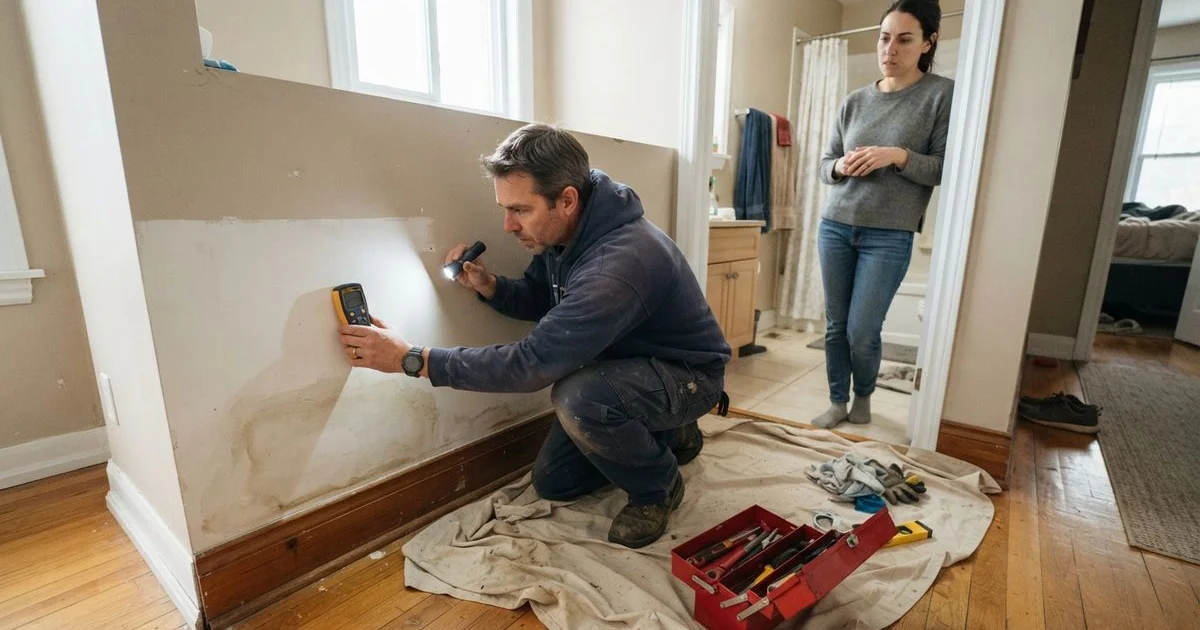
A leak detection specialist has tools built specifically for this problem: acoustic devices that pick up the sound of water moving inside a pipe, thermal cameras that spot temperature differences caused by moisture, and moisture meters that map how far dampness has spread through a wall or floor. This lets a plumber pinpoint a leak’s location with far more precision than guessing based on where a stain appears, which often isn’t directly above or below the actual source.
After the leak is found
Fixing the pipe is only the first step. Any wet insulation, drywall, or flooring that’s been damp for more than a day or two generally needs to be dried out or replaced, since drywall and insulation don’t dry cleanly once soaked and often stay damp enough to support mold even after the surface looks dry. For anything beyond a small, quickly caught leak, it’s worth having the affected area properly dried or assessed rather than just patching over it and hoping.
Reviewers on this directory consistently mention how quickly a leak detection specialist found and explained the source of a problem, which is one of the clearest signals of a technician who knows what they’re doing. More on how that feeds into rankings is on the methodology page, and the full directory covers licensed plumbers across Ontario for every stage of this kind of repair.
Questions people ask
- How long does it take for mold to grow after a leak?
- Mold can begin developing within 24 to 48 hours in a warm, damp area. A leak that goes unnoticed for weeks or months gives it far more time to establish and spread.
- Can I smell a hidden leak before I see it?
- Often yes. A persistent musty or earthy smell in one area of the home, especially near a bathroom, kitchen, or basement wall, is frequently the first sign people notice before any visible damage shows up.
- Is all mold from a plumbing leak dangerous?
- Mold exposure affects people differently, and some types are more concerning than others. This guide covers general risk, not a medical assessment. If you have respiratory symptoms or are concerned about a specific mold, consult a health professional and a qualified mold inspector.
- How does a plumber find a leak I can't see?
- Leak detection specialists use tools like acoustic listening devices, thermal imaging, and moisture meters to trace a leak's location without cutting open walls or floors unnecessarily.